
An honest word first
In Singapore, feng shui is part of everyday life: a money plant by the window, a pair of lions at a shop entrance, a thorough clean before Chinese New Year. Crystals fit naturally into that tradition. In feng shui, certain stones are believed to attract and hold 财气 (cái qì), the energy of wealth, and to support steady progress at work.
Before we begin, a word of honesty: no crystal can make or promise money. What the tradition offers is quieter and still valuable, a physical reminder of your goals placed where you will see it every day. Treat these stones as companions to good planning, hard work and sound professional advice, never a substitute for them.
Citrine, the Success Stone
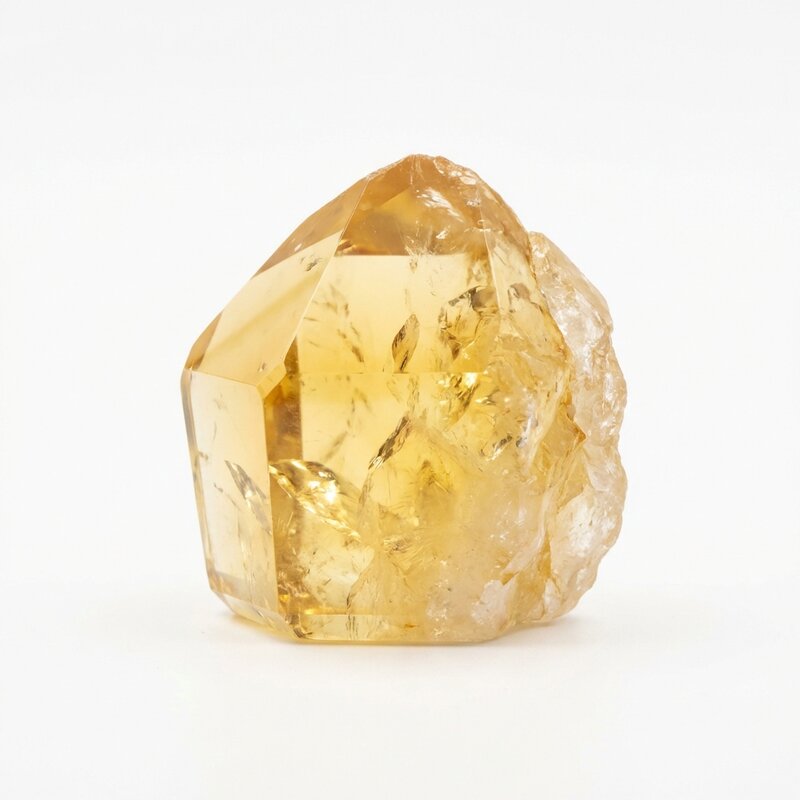
Citrine (黄水晶, huáng shuǐ jīng) is the stone most closely tied to wealth in both Chinese and Western crystal lore. It is yellow to golden quartz, 7 on the Mohs scale, and its sunny colour is said to carry energies of generosity, pleasure and manifestation. Crystal tradition also holds that citrine does not hold negative energy, which makes it a favourite wherever money changes hands.
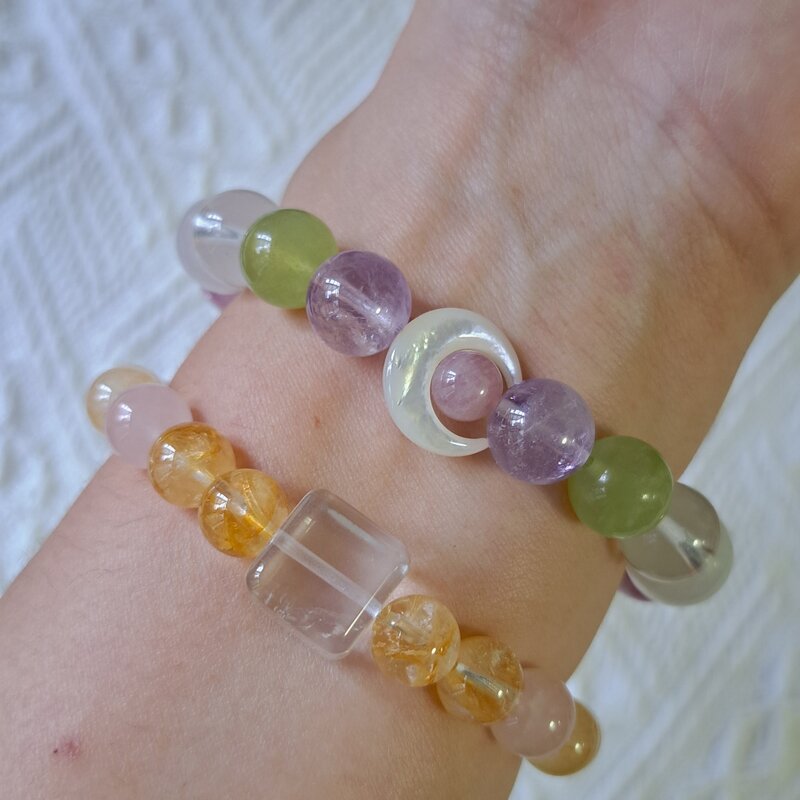
Its classic placement is the cash drawer or till: a small tumbled citrine among the notes, or a point beside the register. Worn as a bracelet, it goes on the left wrist, the receiving side. Paired with soft pink quartz in one strand, it joins abundance with love.
A buying note: much of the citrine sold today is heat-treated amethyst, which turns a deeper orange-brown. Natural citrine is usually paler, closer to champagne.
Pyrite for the desk
Pyrite, known in Chinese as 愚人金, “fool’s gold”, is an iron sulphide with a bright brassy lustre and often near-perfect cubic crystals. In crystal practice it is a stone of action and logic, said to encourage strategic thinking in business and to shield against financial anxiety.
Pyrite is traditionally kept on a desk or workspace rather than worn. Place a cube or cluster where you see it as you sit down to work, beside the laptop or next to your planner. Keep it dry: pyrite oxidises in moisture, so a damp window ledge in Singapore’s humidity is no place for it.
Green phantom quartz and green aventurine
Green is the colour of growth, and in feng shui it belongs to the Wood element, which rules the south-east, the wealth area of the home.
Green phantom quartz (绿幽灵, lǜ yōu líng) is quartz holding ghostly green layers, usually of chlorite, left behind each time the crystal paused and then resumed growing. Chinese crystal tradition links it specifically with 正财 (zhèng cái), wealth that comes from hard work: promotions, a steady salary, a business that grows year after year. It is worn on the left hand.
Green aventurine (东陵玉, dōng líng yù) owes its colour and soft shimmer to tiny flakes of fuchsite, a green mica. Despite its Chinese name, it is not jade but a form of quartz. Nicknamed the Gambler’s Stone, it is thought in crystal lore to be the luckiest of all crystals for prosperity. We would only add that no stone changes the odds, so enjoy it as a symbol of optimism and opportunity. Wear it on the left.
Tiger's eye for courage at work
Tiger’s eye (虎眼石, hǔ yǎn shí) is quartz with a fine fibrous structure that throws a moving band of light across the stone, an effect gemmologists call chatoyancy. In crystal lore it is the stone of courage, said to keep you grounded and confident when facing confrontation. That makes it a natural companion for interviews, pitches and salary conversations. Wear it on the left for confidence, or on the right for protection.
Jade, the stone of prosperity
No stone is more woven into Chinese ideas of good fortune than jade. The name covers two different minerals, jadeite and nephrite, both prized for their toughness as much as their beauty. Jade is traditionally said to attract luck and abundance and to protect its wearer, and many wealth symbols are carved from it: the pixiu, said to swallow treasure and never let it go; the ruyi, whose name means “as you wish”; and the gourd, which stores blessings. Our Jade and Zodiac compendium explains each motif.
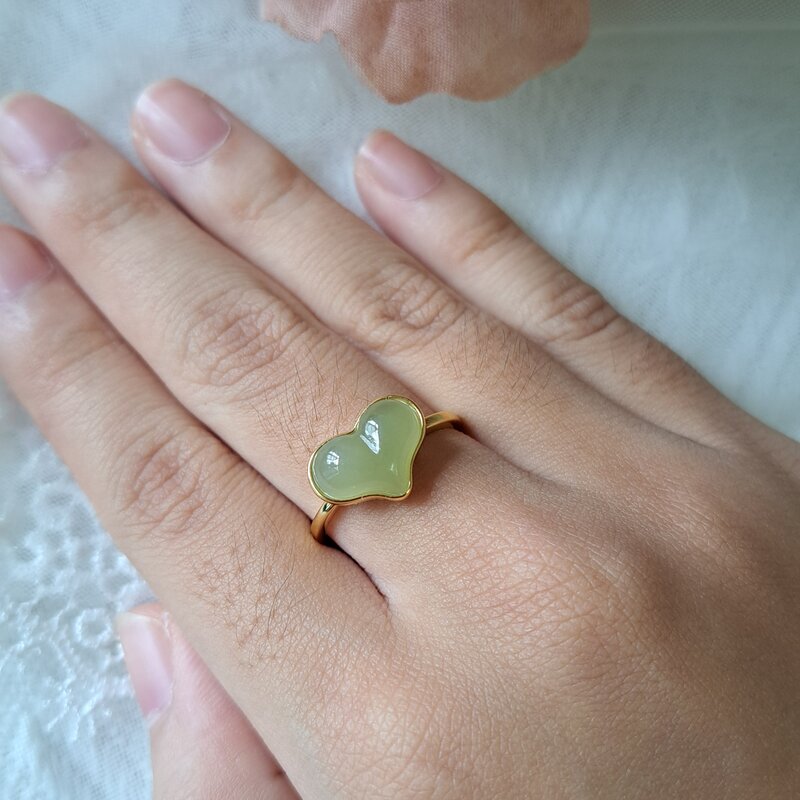
A jade ring is a quiet way to carry the tradition every day. Our guide to jade jewellery covers choosing and wearing one, and our jade buying guide explains what to check before you buy. To see our jade rings up close, join us live on Instagram or TikTok.
Where to place wealth crystals
- The wealth corner. In the Bagua, the south-east of a home or office is the area of wealth and abundance; stand at the centre of the space with a compass to find it. Some practitioners use the far-left corner, as seen from the front door, instead. Keep this area tidy, well lit and free of clutter, and place a citrine cluster, green aventurine or a healthy money plant there.
- The cash drawer. For shop owners, citrine in the till is the classic choice.
- The desk. Pyrite or a citrine point where you see it as you work. Keep the surface clear, since in feng shui clutter is said to block the flow of energy.
- Facing the door. A pixiu is traditionally placed with its head facing outwards, towards a door or window, to draw wealth in.
- On your left wrist. Citrine, green phantom quartz, green aventurine and iolite, traditionally linked with perspective and careful money management, are all worn on the receiving side. Tradition sums it up as 左进右出, “left in, right out”; see which wrist to wear your crystal bracelet on.
The weeks before Chinese New Year, when homes across Singapore are cleaned from top to bottom, are a good moment to refresh your wealth corner and cleanse your crystals too. Our cleansing guide shows how; just keep pyrite away from water.
Crystal meanings and feng shui are shared from tradition for reflection and enjoyment; they are not a substitute for medical, financial or professional advice.