
What is pietersite?
Pietersite is a brecciated form of tiger’s eye and hawk’s eye: stone that was broken apart by natural forces and then cemented back together with quartz. The result is a chaotic swirl of blue-black, gold and brown fragments, each with a silky shimmer that moves as the stone turns. That look shapes pietersite meaning in crystal tradition — it is the stone of “controlled chaos”, sometimes called the tempest stone.
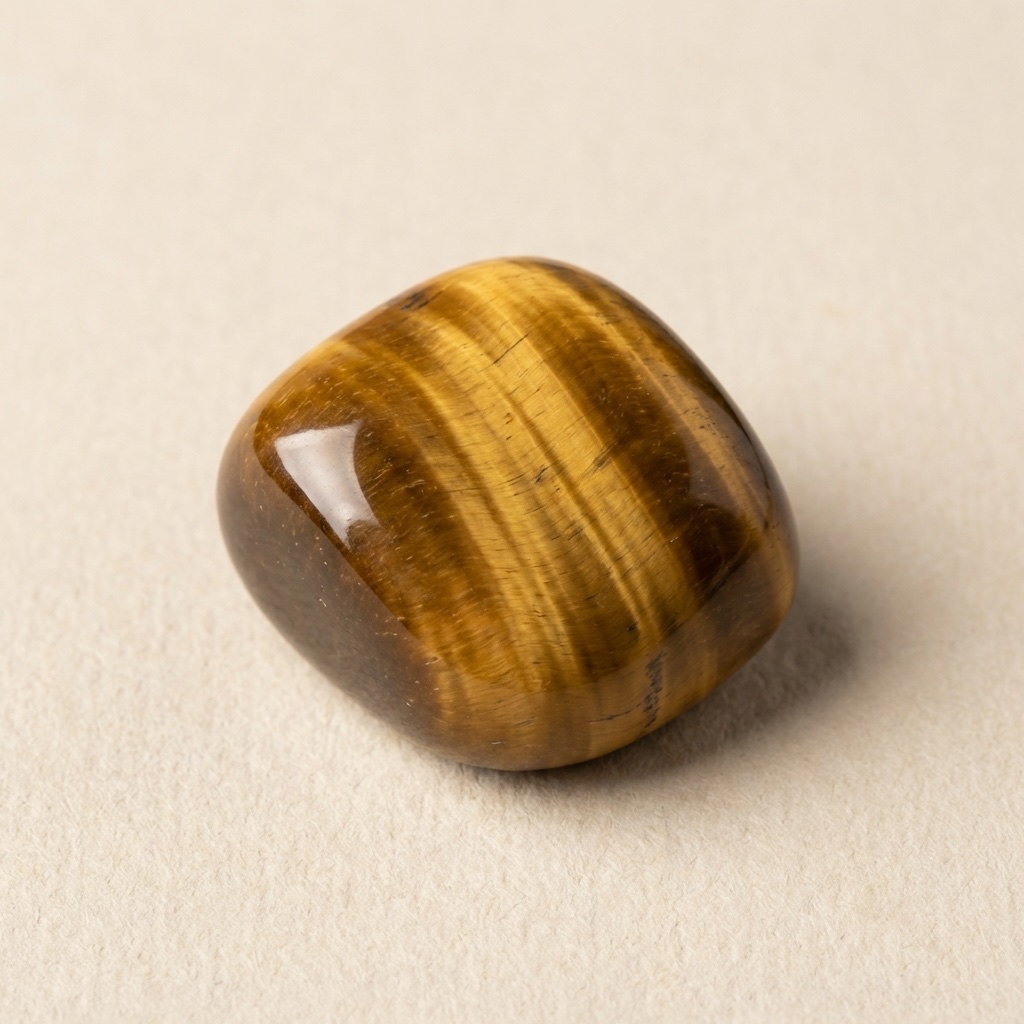
As in tiger’s eye, the shimmer, called chatoyancy, comes from fine mineral fibres held in quartz. Where the fibres keep their original blue, the stone resembles hawk’s eye; where iron has altered them to golden brown, it resembles tiger’s eye. Pietersite is named after Sid Pieters, who first described it in Namibia in the 1960s, and it is also found in China. Its Chinese name, 彼得石 (bǐ dé shí), is a rendering of his name.
Pietersite meaning
In crystal lore, pietersite helps you remain calm and centred even when the environment around you is stormy, chaotic or toxic. Just as the stone itself was shattered and re-formed into something beautiful, it is traditionally associated with resilience: staying clear-headed under pressure, weathering upheaval and coming through it stronger.
That is why it belongs to the workplace group of stones. For anyone in a fast-moving office, a crowded open-plan floor or a tense team, pietersite is said to help you stay composed, see the bigger picture and respond rather than react. It is linked with the third eye and solar plexus chakras, and is believed to support intuition and personal will — clear vision paired with the confidence to act on it.
How to wear pietersite
Unlike many calming stones, pietersite is worn on the right hand. In crystal practice the right is the giving, active side — the hand you act with — so pietersite on the right wrist is said to project its steadiness outwards into how you meet the world. That suits its purpose: it is less about taking something in, and more about how you carry yourself through a storm.
Pietersite pairs well with its close relative tiger’s eye for courage and focus, and with labradorite or amazonite, the other workplace stones, which are traditionally worn on the left. Labradorite on the left and pietersite on the right is one way to guard your energy while staying composed in action. Our guide to which wrist to wear a crystal bracelet on explains the left–right tradition in more depth.
Choosing a pietersite bracelet
No two pieces of pietersite look alike. When choosing a pietersite bracelet or pendant, turn it under good light: the best pieces show strong, rolling shimmer across much of the surface and a lively mix of blue and gold. Gold-and-brown pieces have a warmer look, closer to tiger’s eye, while darker blue pieces feel cooler and more dramatic.
The easiest way to tell pietersite from ordinary tiger’s eye is the pattern. Tiger’s eye shows neat, parallel bands of shimmer; pietersite, being broken and re-cemented, has fragments and swirls running in every direction. As a gift, it suits someone going through a turbulent time at work or in life — a quiet reminder that storms pass. For more ideas, see our guide to meaningful crystal gifts.
Caring for pietersite
Pietersite is a quartz-based stone of about 6.5 to 7 on the Mohs scale, so it is durable enough for everyday wear. Its shimmer depends on a good polish, so the aim of care is simply to keep the surface bright.
- Clean gently. Wipe with a soft, damp cloth and dry it well; avoid harsh chemicals and ultrasonic cleaners.
- Store it apart. Keep it away from harder gems and metal pieces that could scratch the polish.
- Mind the elastic. In Singapore’s humidity, take bracelets off for swimming and showering, and restring them when the cord loosens.
After a difficult day, many people like to cleanse pietersite with moonlight or a little incense smoke. Our guide on how to cleanse crystals covers the main methods.
Crystal meanings are shared from tradition and folklore for reflection and enjoyment; they are not a substitute for medical or professional advice.