
What is labradorite?
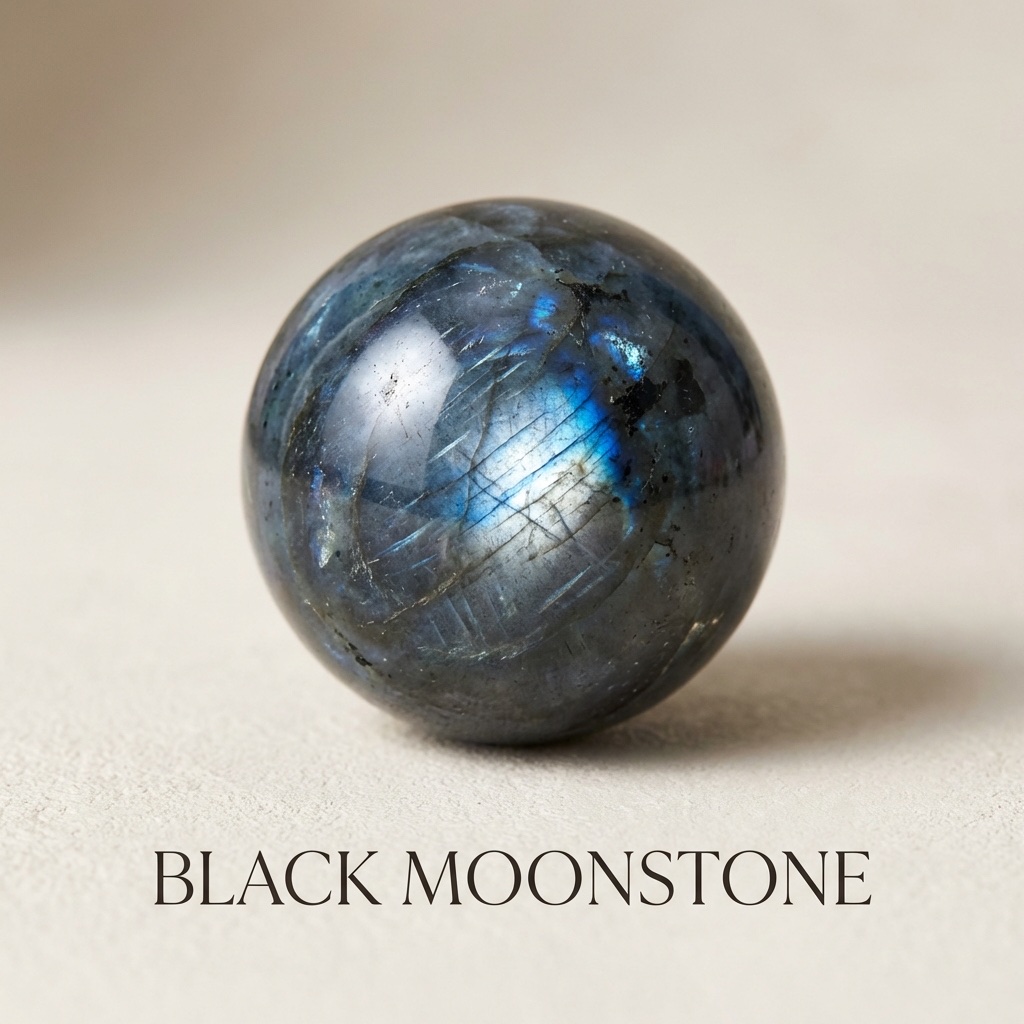
Labradorite is a plagioclase feldspar, one of the most common rock-forming minerals, made remarkable by a single optical effect. Turn a polished piece in the light and a quiet grey surface suddenly flashes peacock blue, green, gold or even orange. That play of colour is called labradorescence, and it is at the heart of labradorite meaning: a stone that looks unassuming until the light finds it.
The effect is not caused by pigment. Inside the stone are extremely thin, alternating layers that formed as it cooled, and light reflecting between them creates colour, much as a film of oil does on water. The stone is named after Labrador in Canada; today it is also mined in Madagascar and in Finland, where an especially vivid variety is sold as spectrolite. In Chinese it is 拉长石 (lā cháng shí), cháng shí being the Chinese word for feldspar.
Labradorite meaning
Labradorite is known in crystal tradition as the “shield of light”. It is believed to protect your own energy field, preventing what practitioners call energy leakage and stopping “energy vampires” — the demanding boss, the draining colleague, the relentless group chat — from wearing down your vitality. That is why it belongs to the workplace group of stones, alongside amazonite and pietersite.
It is also a stone of intuition and transformation. With its hidden flashes of colour, labradorite is said to encourage you to trust your instincts, uncover your own inner strengths and move through change with composure. A well-known legend, often attributed to the Inuit of Labrador, tells that the northern lights were once trapped in the coastal rocks until a warrior struck them free with his spear, leaving some of the light behind in the stone.
How to wear labradorite
Wear labradorite on your left hand — the receiving side in crystal practice — where it is said to protect your own energy field, or wear it as a pendant close to the heart or throat. For a long day in the office, a labradorite bracelet on the left wrist is a discreet choice: its grey base sits easily with work clothes, and the flash appears only as your hand moves.
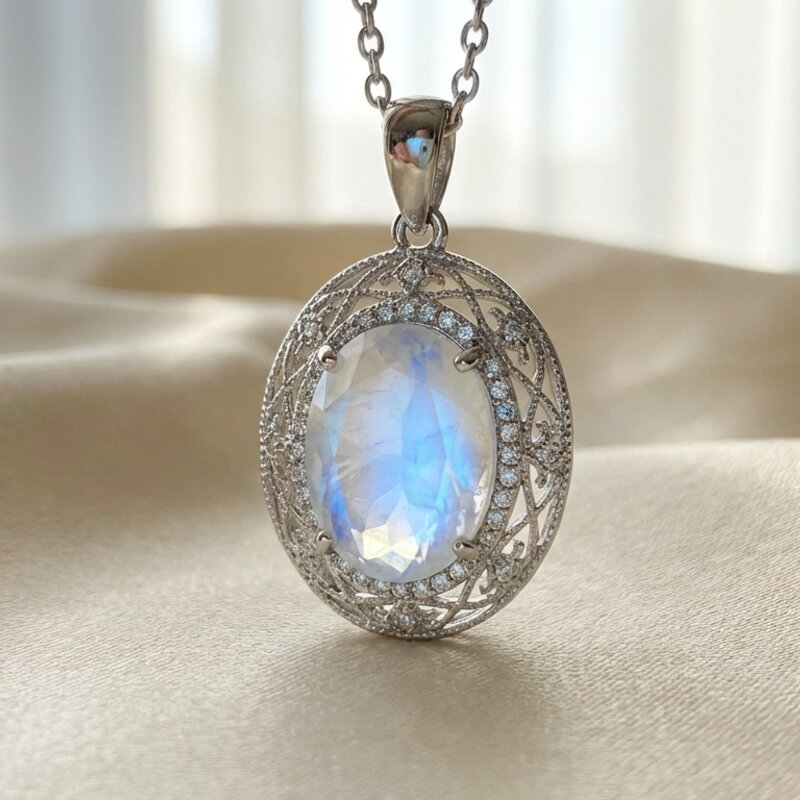
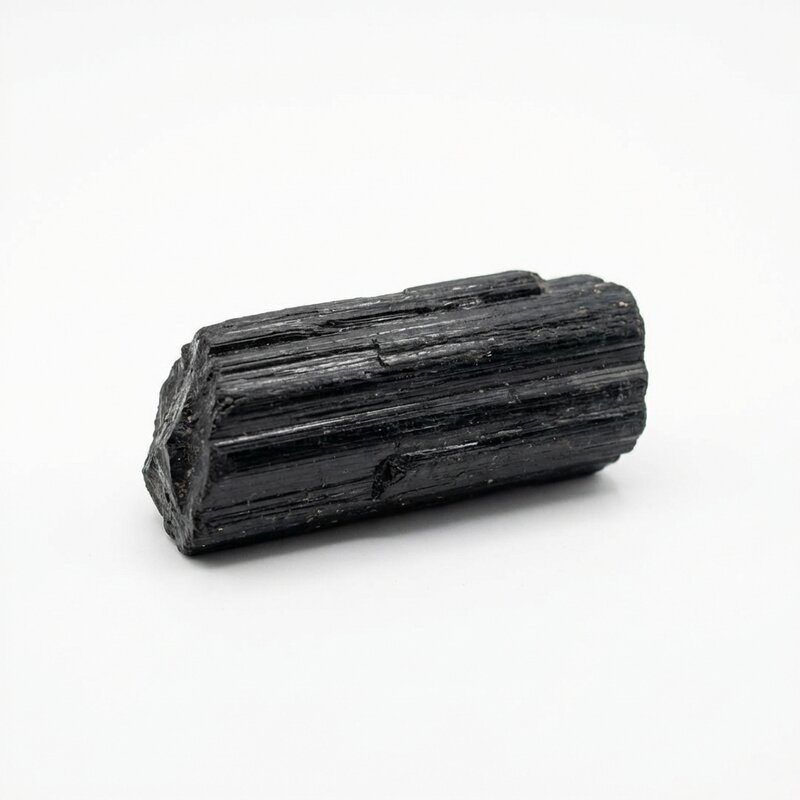
In crystal pairings, labradorite works well with black tourmaline for strong protection, with moonstone — another feldspar with its own glow — for intuition, and with amazonite for keeping calm under pressure. Larvikite, a feldspar-rich stone with a silvery-blue sheen, makes a handsome, grounding companion. Our guide to which wrist to wear a crystal bracelet on explains the left–right tradition.
Choosing a labradorite bracelet in Singapore
Labradorescence only appears at certain angles, so every labradorite piece is a little different. When choosing a labradorite bracelet, turn it slowly under light and look at how many beads flash, how strong the colour is and which colours appear. Blue is the most common flash; gold, green and multicoloured flashes are especially admired. A few beads in any strand will show little colour, and that is normal.
Because the flash comes from the structure of the stone, a darker body colour and a few natural inclusions are expected and can even make the colour look richer. As a gift, labradorite suits someone starting a demanding new role or returning to work — a quiet talisman that looks as good in a meeting room as at the weekend. More ideas are in our guide to meaningful crystal gifts in Singapore.
Caring for labradorite
Labradorite is 6 to 6.5 on the Mohs scale, fine for regular wear but a little softer than quartz. Like all feldspars it has cleavage — natural planes of weakness — so a hard knock can chip or split it.
- Avoid hard knocks. Take it off for the gym, sport and housework, and store it apart from harder stones.
- Clean gently. Wipe with a soft, damp cloth; avoid harsh chemicals, ultrasonic cleaners and long soaks.
- Mind the elastic. Singapore’s humidity is hard on bracelet cord; remove it before swimming or showering, and restring it when it starts to stretch.
Many people like to cleanse labradorite after a particularly draining week — with moonlight, incense smoke or by resting it on a clear quartz cluster. See our guide on how to cleanse crystals.
Crystal meanings are shared from tradition and folklore for reflection and enjoyment; they are not a substitute for medical or professional advice.