
What is moldavite?
Moldavite is a tektite — a natural glass formed by a meteorite impact. About 15 million years ago, a large meteorite struck what is now southern Germany, creating the Ries crater in Bavaria. The impact melted surface rock and flung it eastwards; the molten droplets solidified in flight and fell as green glass across what is now the Czech Republic. Moldavite meaning in crystal lore is shaped by that extraordinary origin: it is prized as a stone of sudden, far-reaching transformation.
Most moldavite is found in southern Bohemia and Moravia, with smaller finds in neighbouring parts of Austria and Germany. Its name comes from the Vltava river, known in German as the Moldau. The Chinese name, 捷克陨石 (jié kè yǔn shí), means “Czech meteorite stone”; strictly, moldavite is not a meteorite itself but earthly rock transformed by one. As a glass it has no crystal structure, and its surface is often deeply etched and sculpted from millions of years in the ground.
Moldavite meaning
In crystal tradition, moldavite is one of the most intense stones there is. It is known for the “moldavite flush” — a sudden feeling of warmth, often in the face or chest, that some people describe when they first hold it — and it is said to accelerate life changes rapidly, clearing away situations, habits and relationships that no longer serve you so that something new can begin.
That reputation is why moldavite is approached with respect. Crystal practitioners describe it as a stone for people who feel ready for change, rather than one to wear casually, and often suggest pairing it with grounding stones. It is linked with the heart and third eye chakras, and in crystal lore is associated with spiritual awakening, intuition and a clearer sense of purpose. As with any crystal, these are beliefs and personal experiences, not predictable effects.
How to wear moldavite
With moldavite, the traditional advice is simple: wear it with caution and start slowly. Begin by holding a piece for a few minutes, or wearing a pendant for an hour or two, and notice how you feel before building up to longer periods. Many people keep moldavite as a pendant or a small stone they carry, rather than wearing it all day from the start.
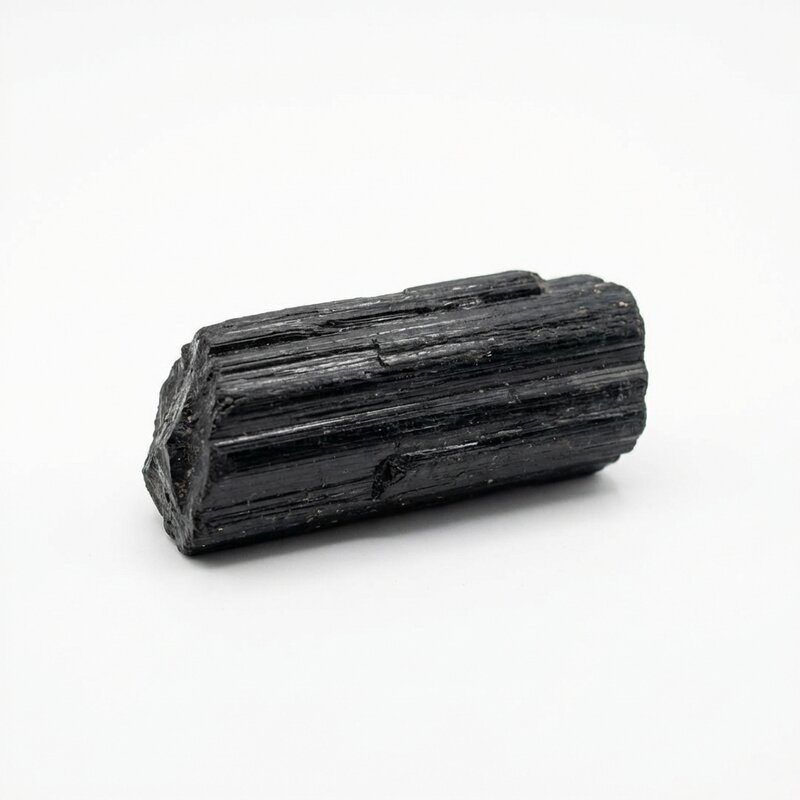
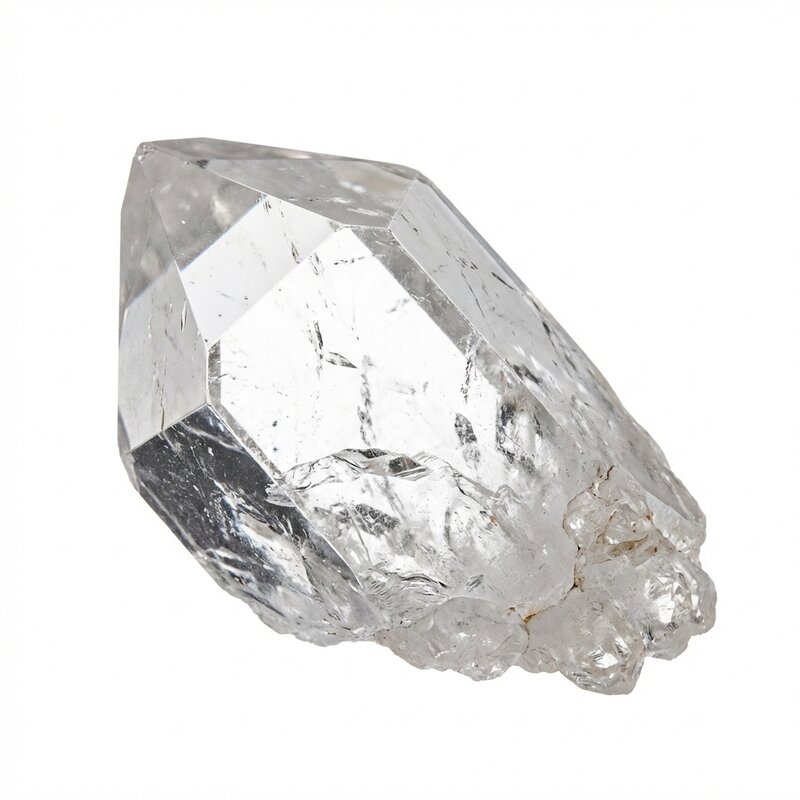
Moldavite is often combined with grounding stones to balance its intensity. Black tourmaline and hypersthene are traditional choices for staying steady, while clear quartz is said to amplify it. Seraphinite and Super Seven share its place among the high-vibration stones in our crystal guide.
Real or fake moldavite?
Moldavite is rare, and fakes are very common — green glass, often moulded to imitate its etched surface, is sold widely online and at markets. A few pointers help:
- Colour. Real moldavite is a soft bottle green to olive green. Bright emerald or neon green is a warning sign.
- Surface. Natural pieces have irregular, sculpted etching that differs on every stone. Identical shapes or repeated patterns suggest moulded glass.
- Inside. Under a loupe, moldavite usually shows swirling flow lines, bubbles and tiny worm-like inclusions of pure silica glass, called lechatelierite.
- Price and source. Large pieces at very low prices are rarely genuine. Buy from a seller who will tell you plainly where a piece came from.
Faceted moldavite is genuine too, though cutting removes the natural surface, so a trustworthy source matters even more. When in doubt, a gemmological laboratory can confirm it.
Caring for moldavite
Moldavite is glass, about 5.5 on the Mohs scale, so it is softer than quartz and can chip or scratch. Its natural etched surface is part of its value, so it should never be polished smooth or scrubbed.
- Handle it gently. Store it on its own in a soft pouch, and take a pendant off for sport and sleep.
- Clean lightly. Rinse briefly in plain water or wipe with a soft cloth; avoid chemicals and ultrasonic cleaners.
- Protect fine edges. Thin, sculpted pieces are delicate at the edges, so keep them away from hard surfaces.
If you like to cleanse your stones, gentle methods such as moonlight or resting moldavite on a clear quartz cluster are traditional; see our guide on how to cleanse crystals.
Crystal meanings are shared from tradition and folklore for reflection and enjoyment; they are not a substitute for medical or professional advice.